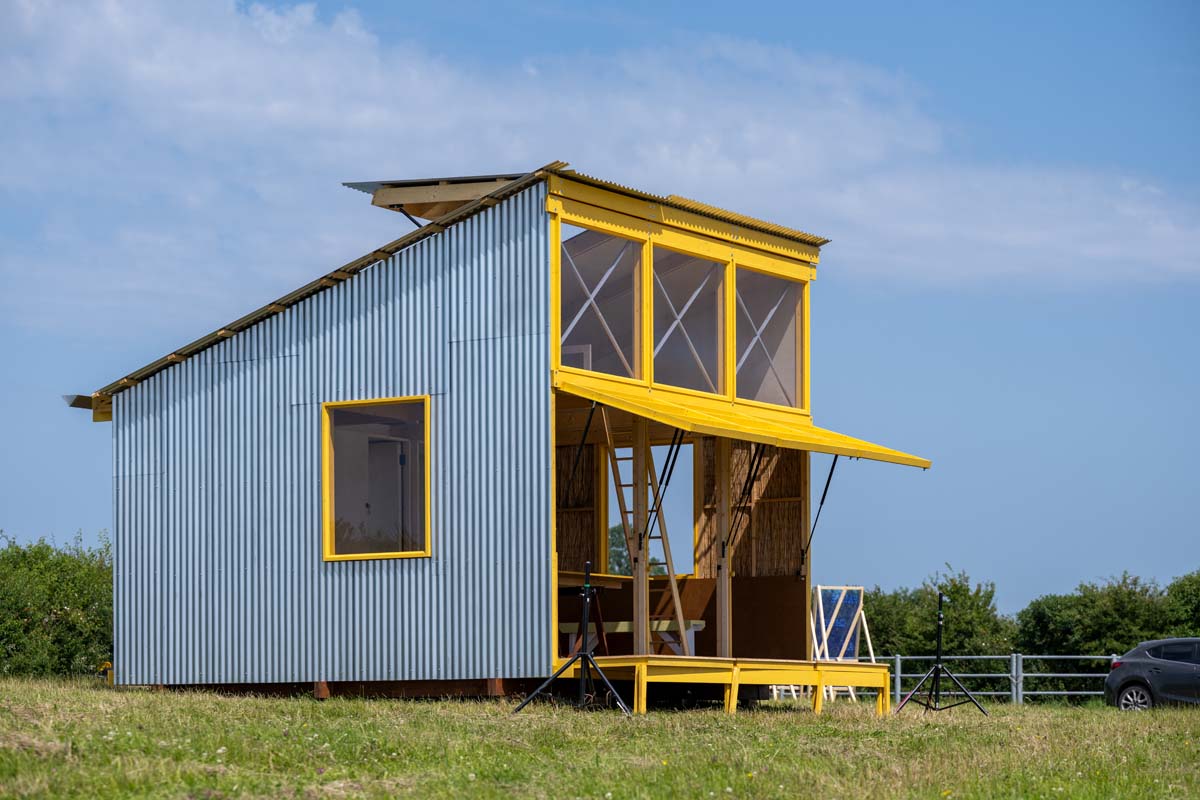
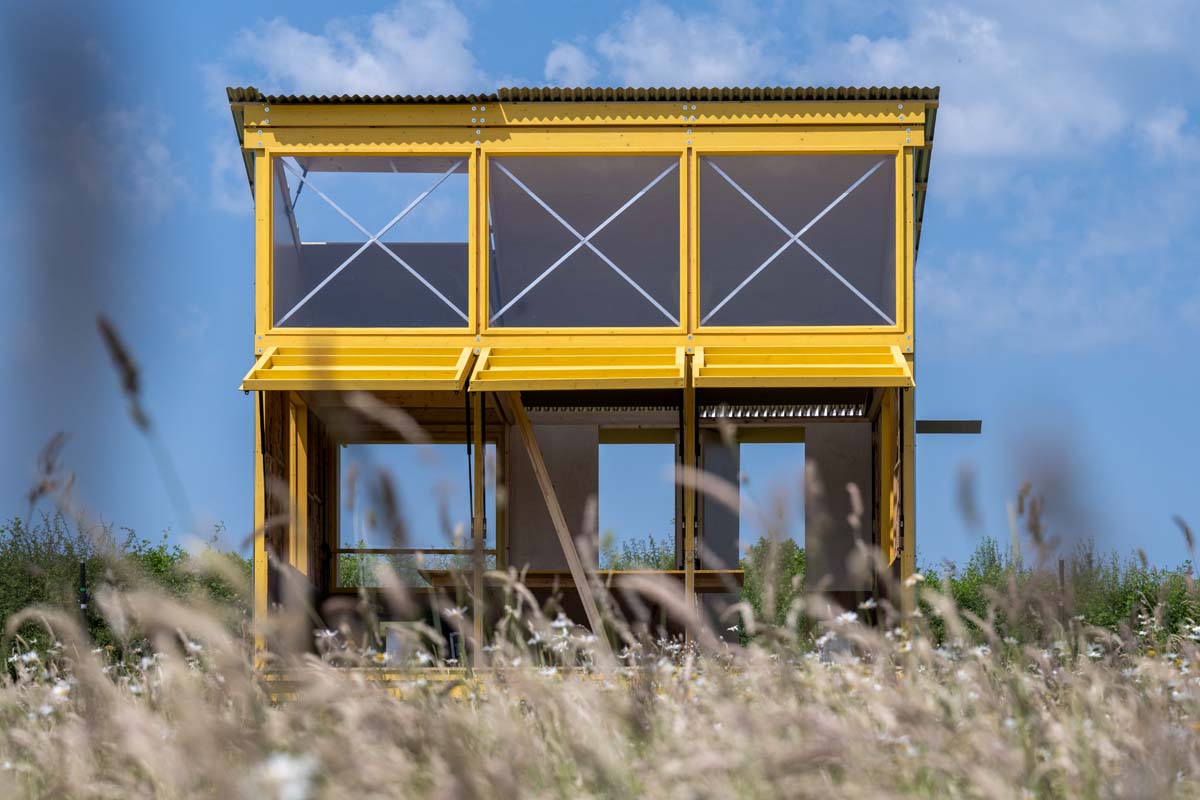
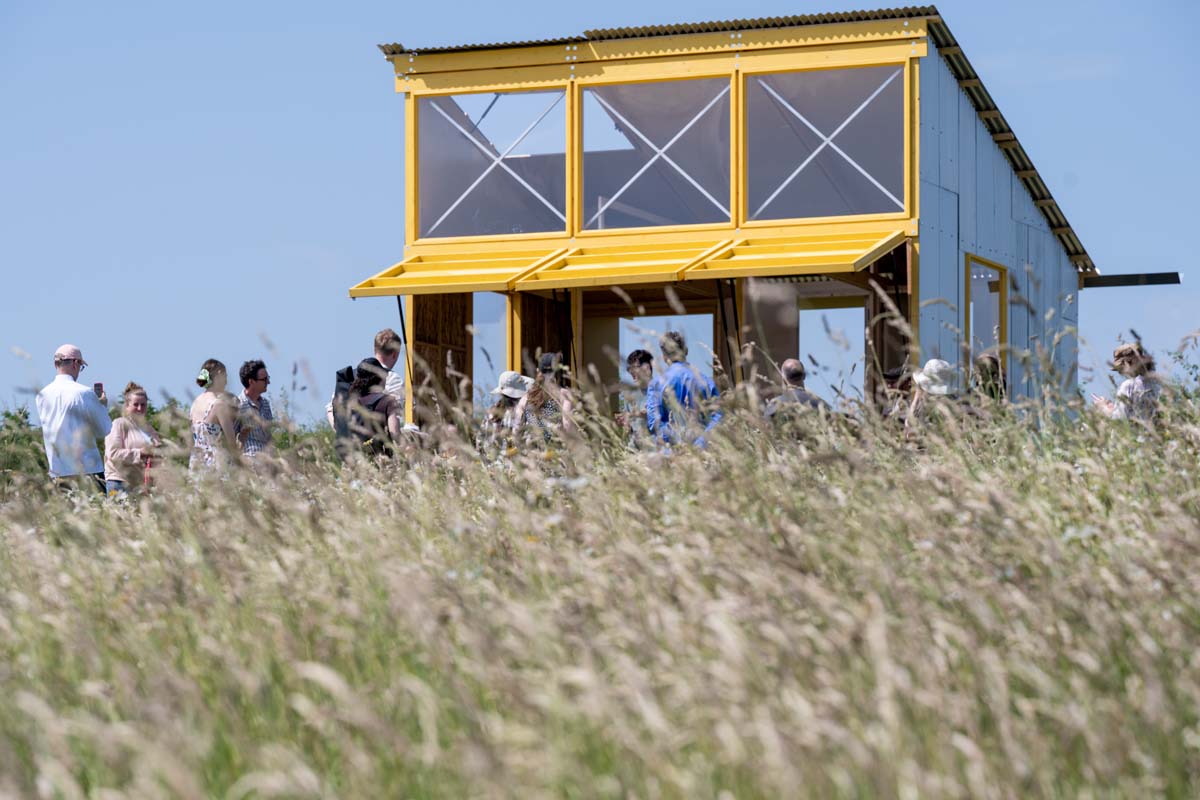
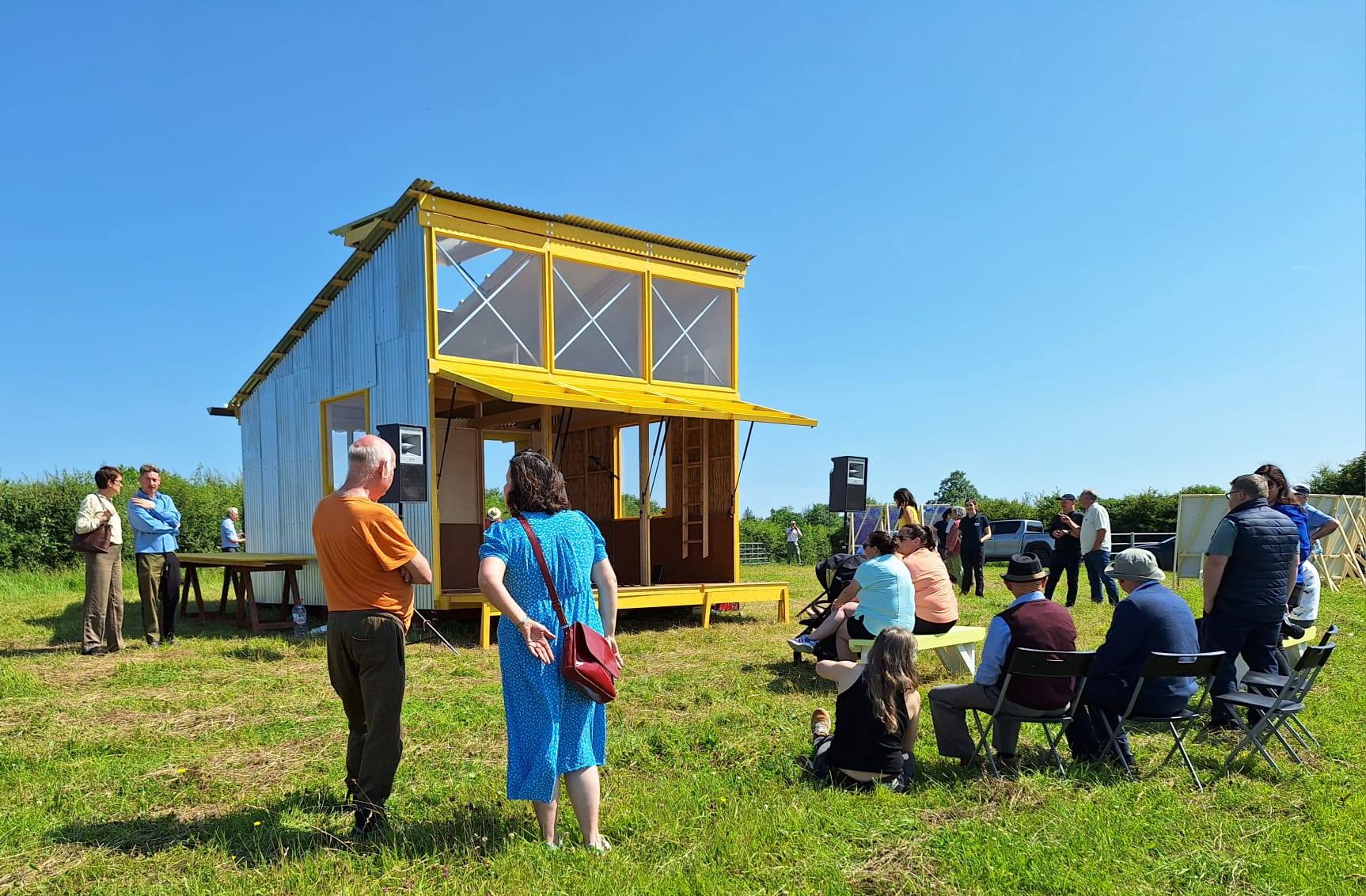
Bog Bothy launch with students from Scoil Bhríde, Clara. Photo by Conor Healy - Picture It Photography, courtesy of the Irish Architecture Foundation.

Creative
Nation

Bog Bothy: A New Peatlands Architecture

Scroll
5 min read

Bog Bothy: A New Peatlands Architecture

5 min read

21/01/26

Bog Bothy: A New Peatlands Architecture

Out on the bog, where land, memory and climate meet, a small structure has been quietly changing how people gather, talk and imagine the future. Bog Bothy is not a building in the conventional sense. It’s a place to pause, meet, listen and rethink our relationship with Ireland’s peatlands, landscapes that have shaped lives for generations and are now at the centre of urgent ecological change. Designed with communities, not dropped onto them, the Bothy offers a new way of being on the bog: one rooted in care, creativity and shared stewardship.

Bog Bothy began with a simple idea: the bog belongs to many. At its heart are peatland communities across Ireland’s midlands, people with deep generational ties to the bog who are living. The goal of Bog Bothy is to create a co-designed space on the bog where communities, practitioners, and policymakers can collectively reimagine the future of Ireland’s peatlands at a moment of ecological and cultural transition, shifting the narrative from extraction to stewardship. The project delivers a replicable, low-impact Bothy prototype alongside a community-led co-design model that strengthens local capacity, deepens public understanding, and generates behavioral change through increased climate empowerment, new cross-sector collaboration, and sustained community use of the Bothy as a gathering device.

People, Places and People at the heart of the project

Bog Bothy developed through a structured programme of research, design, community engagement and public activity. Each phase built on the last, ensuring that the Bothy’s architectural form and its wider programme were shaped by the people, places and peatlands at the heart of the project.

The project is led by the Irish Architecture Foundation (IAF), curators and producers with a strong focus on placemaking, in partnership with architectural practice 12th Field, who led the research and co-design process.

Support and collaboration came from Creative Ireland, National Parks and Wildlife Service, Offaly and Meath County Councils, and The Heritage Council, alongside deeply involved community partners including Clara Heritage Society, Girley Meitheal, Friends of Ardee Bog, and others across the midlands.

Fabrication and co-build partners — Common Knowledge, SpaceForms, and Midlands Men’s Sheds — played a hands-on role, ensuring the Bothy was not just designed with communities, but physically made with them.

Alongside the build, the IAF and 12th Field produced a touring public programme that travelled with the Bothy. This programme unfolded over the summer through two major tour stops, in Clara Bog and Girley Bog, each timed to sit alongside existing community festivals and national cultural moments, including the Bog Trotters Festival and Heritage Week. This allowed the Bothy to be programmed not only by the project team but by the communities themselves, who shaped their own gatherings, walks, readings, workshops and informal uses around it. In parallel, the IAF and 12th Field delivered a series of architectural and ecological events that created space for deeper conversations about the future of Ireland’s bogs.

From Extraction to Stewardship

At a time when Ireland’s peatlands are undergoing major ecological and cultural transition, the project shifts the narrative from extraction to stewardship. The Bothy creates a shared space on the bog where communities, practitioners and policymakers can come together to imagine new futures grounded in care for place.

The outcome is twofold: a low-impact, replicable Bothy prototype, and a community-led co-design model that strengthens local capacity, deepens climate understanding and supports long-term engagement. By foregrounding peatlands as living cultural landscapes, the project invites people to think differently about how we build, gather and act in fragile ecologies.

Bog Bothy’s Main Activities

The project began with in-depth design research by 12th Field, mapping the “built bog” — from vernacular shelters and tea huts to industrial remnants and tracks — revealing a landscape already shaped by ingenuity and labour. This research asked a key question: how might a new architecture respond with sensitivity and reciprocity?

Alongside this ran an extensive programme of community engagement. Through workshops, walks, conversations and site visits, local stories and memories became the project’s primary design material. A four-day skills and climate-action workshop at Common Knowledge brought over twenty participants together to learn, build and imagine collectively — seeding a deep sense of ownership long before the Bothy appeared on the bog.

The structure itself was built through a community co-build with local Men’s Sheds, becoming a touring shelter and gathering space that could move between peatlands.

In summer 2025, the Bothy travelled to Clara Bog and Girley Bog, aligning with local festivals and national cultural moments like the Bog Trotters Festival and Heritage Week. Communities programmed their own events — walks, readings, workshops, and informal gatherings while the IAF and 12th Field hosted architectural and ecological conversations.

An outdoor photographic exhibition by Shane Hynan traced the past, present and future of peatlands, while artist-in-residence Luke Casserly developed site-responsive sound work rooted in listening, memory and field recording.

Bog Bothy: Looking back at Clara and Girley in Summer 2025

Open Video

Bog Bothy’s Main Activities

The impact of Bog Bothy emerges from the cumulative effect of three years of shared work, research, co-design, making and public gathering, that together reshaped how people engaged with their peatlands, with each other, and with the possibilities of architecture in a time of transition. Rather than a single moment, the project created a sustained environment in which communities reconnected with their bogs, individuals encountered new forms of climate understanding, and cross-sector partners found common ground in a modest structure that invited conversation and care.

For communities involved from the start, the co-design process built confidence, skills and agency. Many spoke of recognising themselves in the structure when it finally arrived on their local bog.

During its summer tour, over 2,000 people engaged directly with the Bothy across more than 100 days of public access. Visitors described the experience as creative, communal and emotional. Over half reported a stronger understanding of how architecture can support climate action, while more than six in ten felt more empowered to act on climate issues.

For the wider sector, Bog Bothy demonstrated how architecture can be a catalyst for dialogue rather than an endpoint — creating space for ecologists, policymakers, architects and communities to meet on equal terms. For partners and funders, it offered a model for how creativity and care can support national climate goals.

Participation wasn’t an add-on, it was the method

Bog Bothy treated architecture as a negotiated, relational practice, shaped over time through trust, listening and shared labour. Community members didn’t just contribute ideas; they shaped the structure itself.

The co-design phase became an act of hospitality, creating a sense of ownership that welcomed others in rather than closing ranks. Over the summer, the Bothy hosted a remarkable diversity of people across generations, reaching an estimated 150,000 online alongside in-person engagement.

The real measure of success wasn’t numbers alone, but the depth of conversation and care that emerged around the Bothy.

What did people say?

Participants spoke repeatedly about connection, memory and seeing the bog anew.

Kate Flood, ecologist and steward of Girley Bog, described the Bothy as “a place to come and meet people… not just for your own walk and thinking,” noting how it helped rebuild a sense of community and momentum around re-wetting and future planning.

Artist and collaborator Shane Hynan reflected on how architecture became “the anchor to build a conversation around… allowing room for all voices.”

The role of Creative Ireland

Creative Ireland’s support has been central and transformative, allowing the IAF and 12th field to demonstrate that architecture is central to shaping climate futures not just through building structures but through building knowledge and relationships of care and conversation that make projects like this possible long into the future. Creative Ireland’s core funding enabled a 3-year relational, community-led process. It is rare for people to engage in such a project on this kind of durational basis which has allowed the project to meaningfully engage and develop during its lifetime.

Read more about Bog Bothy here: https://iaf.ie/events/bog-bothy-clara

Stay up to date

×