A Project Built Around Public Engagement
At the core of the programme is a commitment to making archaeology accessible, welcoming and relevant. The 2025 season officially launched at the St Anne’s Park Rose Festival, where a large outdoor bilingual exhibition introduced the history of St Anne’s House through maps, photographs, architectural drawings and personal stories.
Over 1,500 festival visitors explored artefacts uncovered in previous excavation seasons, including stained glass, decorative plasterwork and encaustic tiles. Many signed up on the spot to take part in the excavation, setting the tone for a season rooted in curiosity, creativity and community participation.
21 Days of Community-Led Discovery
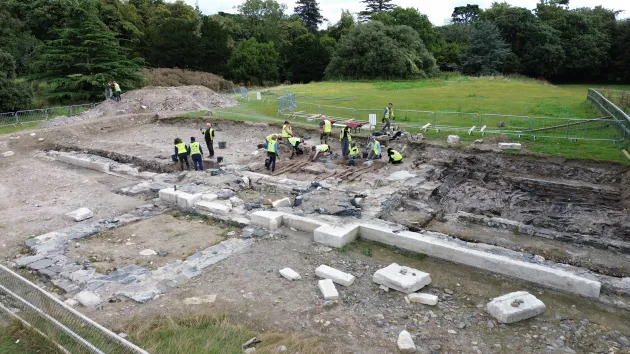
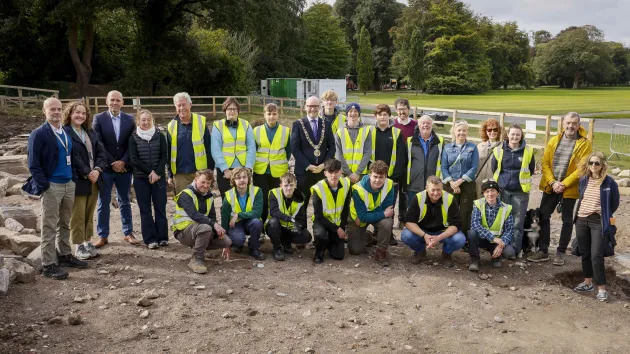
From August to September, the project delivered 21 days of open excavation involving 243 volunteers, professional archaeologists, transition year students and trainee guides. Working side by side, participants uncovered new sections of the historic mansion and deepened understanding of its architectural development.
Key discoveries included the full outline of the Picture Gallery, complete with charred timbers and a fireplace that survived the 1943 fire, along with portions of the Main Hall, fragments of marble columns, a brick-vaulted heating culvert and an ornate porch floor confirming its original layout. Finds ranged from a 19th-century medicine bottle and stained-glass fragments to a much-loved 1970s Tayto packet, delighting younger visitors.
Archaeology in a Living Public Space
More than 4,500 people stopped to watch, ask questions and explore the excavation as it unfolded. A full-time on-site guide and a rotating team of trainees ensured visitors could engage with the site every day, view newly uncovered artefacts and learn about the evolving story of St Anne’s House.
This high level of public access and interpretation was central to the project’s recognition by the Archaeological Achievement Awards, highlighting the value of embedding archaeology within everyday community life rather than behind barriers.
Education, Inclusion and Lasting Impact
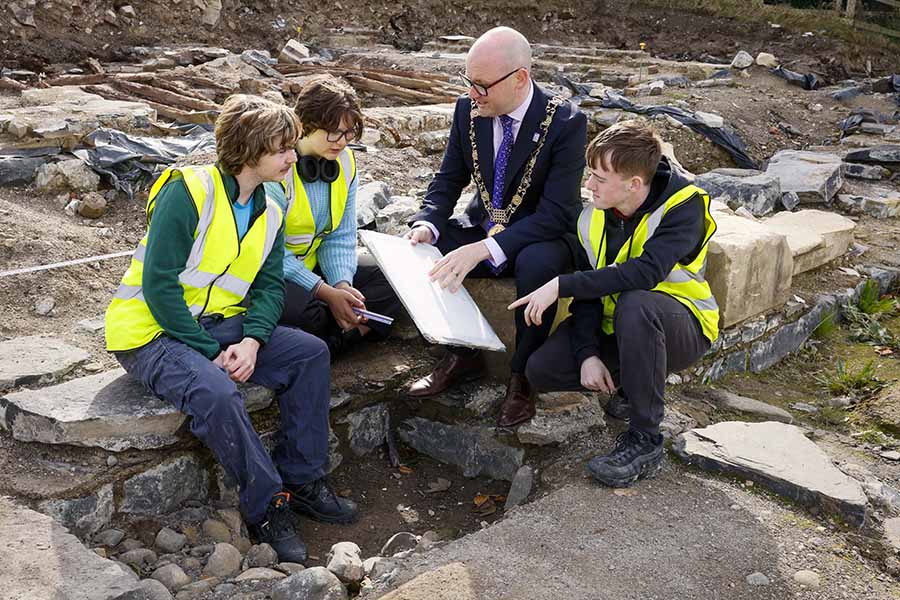
Education and inclusion were key pillars of the 2025 programme. Transition year students participated weekly over five weeks, gaining practical archaeological experience and guiding visitors during the final week. Eleven local primary and secondary school classes took part in dedicated tours, while further-education students received online training and on-site experience.
International Recognition
Winning the Archaeological Achievement Award for Public Dissemination formally recognises the project’s success in storytelling, education and public engagement. A visit from the Lord Mayor of Dublin, Councillor Ray McAdam, further underscored its significance, drawing national media attention to the work taking place in St Anne’s Park.
Looking Ahead
Post-excavation work is now underway, with volunteers cataloguing more than 1,500 artefacts from recent seasons. As calls grow for greater interpretation and visibility of the site, the St Anne’s Park Community Archaeology Project stands as an award-winning example of how heritage, creativity and community collaboration can strengthen connections to Dublin’s past, and ensure that history is discovered, shared and celebrated by the people who live alongside it.